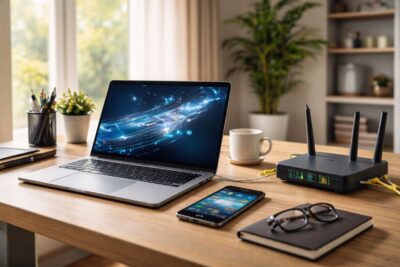
Many people compare fibre vs LTE internet South Africa options when choosing a new connection. Both technologies provide internet access, but they perform very differently. Fibre internet South Africa households and businesses prefer usually delivers faster speeds, lower latency, and more stable connections. LTE internet relies on mobile towers, while fibre uses dedicated fibre-optic cables to transmit data at extremely high speeds.
Understanding the difference helps customers choose the right ISP provider in South Africa for their needs. If you rely on the internet for work, streaming, gaming, or online business tools, the type of connection you choose can significantly affect your experience.
How fibre internet works
Fibre internet uses fibre-optic cables that transmit data using light signals. These cables carry large amounts of data quickly and with minimal interference. Because the connection runs through physical cables instead of wireless signals, fibre internet South Africa users experience consistent speeds and low latency internet performance.
This makes fibre ideal for households with multiple devices. Families often stream movies, attend online classes, and work remotely at the same time. With uncapped fibre South Africa packages, users can do all of this without worrying about slow speeds or data limits.
Fibre also works well for businesses. Many companies rely on business fibre South Africa connections to power cloud software, payment systems, and communication tools. A stable connection helps prevent downtime and keeps teams productive.
How LTE internet works
LTE internet connects devices through mobile network towers. A router receives the signal and distributes internet access through Wi-Fi inside the home or office. This technology works well in areas where fibre infrastructure is not available.
However, LTE connections often slow down when many people connect to the same tower. Network congestion during peak hours can reduce speeds and increase latency. For activities like streaming internet South Africa users enjoy or video conferencing, this can cause buffering or dropped calls.
LTE packages may also include data limits, which means heavy users can reach their monthly cap quickly.
Why fibre is usually the better option
When comparing fibre vs LTE internet South Africa customers usually find fibre delivers stronger overall performance. Fibre provides faster download and upload speeds, more reliable connectivity, and better performance during busy hours.
For households that depend on work from home internet, fibre supports video meetings, file uploads, and cloud tools without interruptions. Gamers benefit from lower latency, while families enjoy smooth streaming across multiple devices.
Choosing a reliable internet provider that offers Openserve fibre infrastructure can significantly improve the quality of your internet connection. With fibre internet South Africa customers get a stable connection designed for modern digital lifestyles.
If fibre coverage is available in your area, it often becomes the best long-term solution for fast internet South Africa homes and businesses depend on.